
Construction work in New York often happens far above the ground, on scaffolds, ladders, roofs, and hoists. Because falls and falling objects are among the most dangerous hazards on a job site, the state has a law that places responsibility for safety equipment on owners and contractors. That law is New York Labor Law 240(1), widely known as the Scaffold Law. This article explains what the New York Scaffold Law says, who it protects, the defenses that can apply, and how it fits with other rules. It is general information from Bisogno & Meyerson, LLP, not legal advice about any particular case.
What Labor Law 240(1) Requires
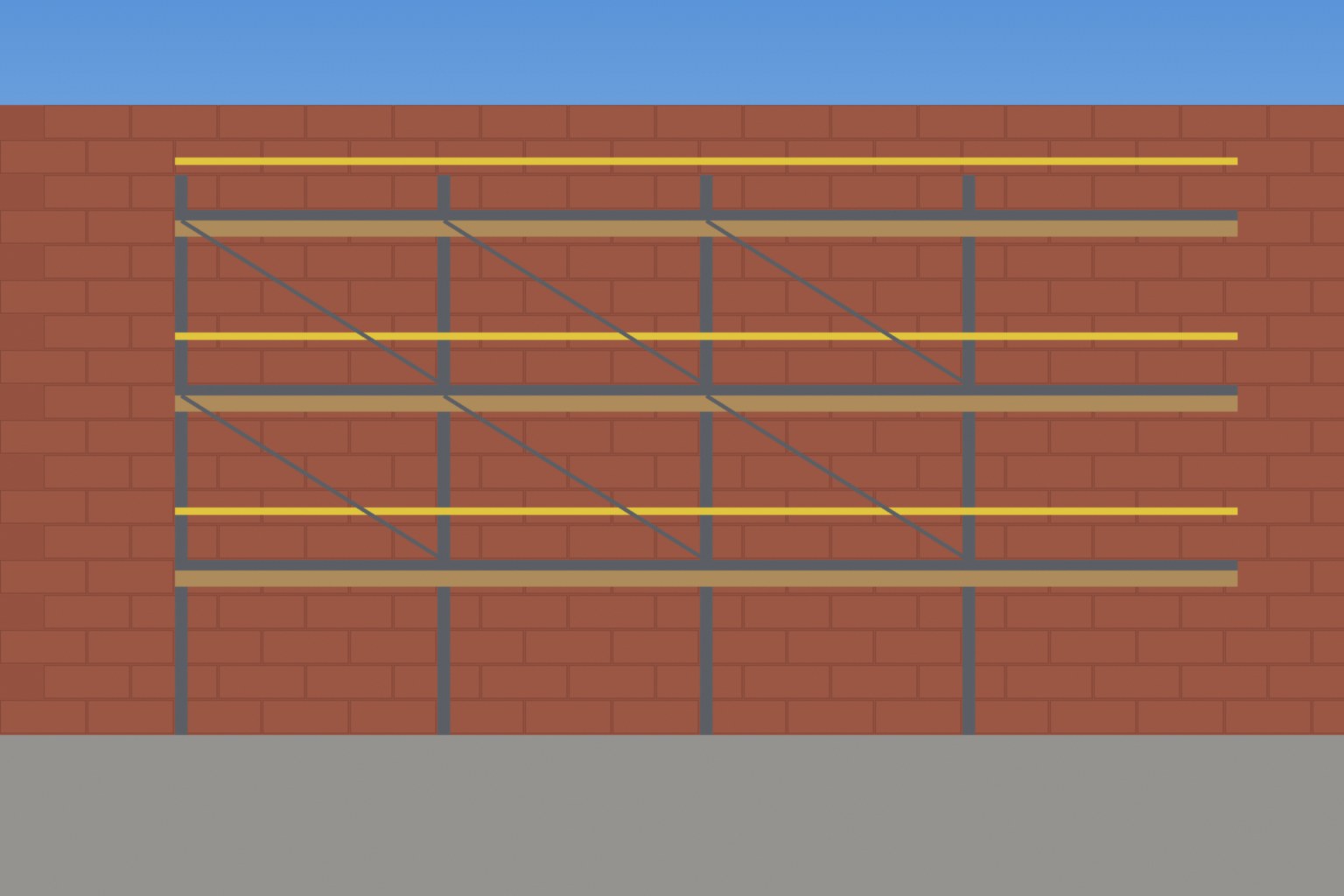
Labor Law 240(1) requires owners and contractors, and their agents, to furnish or erect proper safety devices for workers doing certain kinds of work at elevation. The statute names devices such as scaffolding, hoists, stays, ladders, slings, hangers, blocks, pulleys, braces, irons, and ropes, and requires that they be constructed, placed, and operated so as to give proper protection.
The covered work includes the erection, demolition, repairing, altering, painting, cleaning, or pointing of a building or structure. Owners of one- and two-family dwellings who contract for work but do not direct or control it are excluded.
Absolute Liability for Elevation-Related Hazards
What makes the Scaffold Law unusual is the type of liability it creates. When an owner or contractor fails to provide proper protection and that failure is a proximate cause of a worker’s injury, liability is often described as absolute. The duty is nondelegable, which means an owner or general contractor can be responsible even if it did not supervise the work and even if a subcontractor caused the problem.
The law applies to elevation-related, or gravity-related, hazards. That generally means two kinds of accidents:
Falling workers
A worker falls from a height because a scaffold collapsed, a ladder slipped, a guardrail was missing, or no harness or tie-off point was provided.
Falling objects
An object that was being hoisted or secured, or that required securing, falls and strikes a worker because of an inadequate safety device.
Not every accident on a construction site falls under section 240(1). Courts look at whether the injury flowed directly from the force of gravity and from the absence or failure of a device meant to protect against an elevation difference.
The Comparative Negligence Nuance
In most New York injury cases, an injured person’s own carelessness reduces damages under CPLR 1411, as our article on comparative negligence explains. Section 240(1) works differently. When a statutory violation is a proximate cause of the injury, the worker’s comparative negligence is generally not a defense and does not reduce the owner’s or contractor’s liability on that claim. A worker who was somewhat careless can still recover under 240(1) if the lack of proper protection contributed to the fall.
Defenses: Sole Proximate Cause and the Recalcitrant Worker
Absolute liability does not mean automatic liability. Two related defenses come up often.
Sole proximate cause
If proper safety devices were provided and the worker’s own conduct was the only cause of the accident, there is no statutory violation that caused the harm, and the claim fails. Defendants commonly argue that adequate devices were available, the worker knew he or she was expected to use them, and the worker chose not to for no good reason.
Recalcitrant worker
A narrower version of this argument is the recalcitrant worker defense. It applies when a worker deliberately refused to use available, adequate safety devices after being instructed to use them. Instructions alone are not enough; the devices must actually have been provided and suitable.
Whether either defense applies depends heavily on the facts, which is why early investigation and witness statements matter.
How 240(1) Fits With Other Laws
Workers injured on the job are usually entitled to workers’ compensation benefits, and an employer is generally shielded from a direct lawsuit. A Scaffold Law claim is typically brought against the property owner, general contractor, or other parties that are not the worker’s employer. Labor Law 241(6), which ties liability to specific Industrial Code violations, and Labor Law 200, which reflects common-law negligence, may also be part of a case; our post on Labor Law 241(6) and 200 explains both. Our construction accidents page gives an overview of these claims.
Common Scaffold Law Situations
Claims often involve collapsing or unsecured scaffolds, ladders that shift or lack footing, missing guardrails on roofs and floor openings, unprotected holes, and materials that drop during hoisting. The firm’s pages on scaffolding and ladder accidents and on scaffold accidents in New York City discuss these situations in more detail.
Steps After a Fall on a Job Site
Get medical care and report the accident to your employer. Write down the names of the general contractor, the owner, and co-workers who saw what happened. Take photos of the scaffold, ladder, or area if you can do so safely. Keep copies of workers’ compensation forms and medical records. Most personal injury lawsuits must be filed within three years under CPLR 214, and shorter notice deadlines can apply when a public entity owns the property.
Talk With Our Firm
Bisogno & Meyerson, LLP has represented injured workers from its Brooklyn office at 7018 Fort Hamilton Pkwy, Brooklyn, NY 11228, since 1994. A free consultation is a chance to review how Labor Law 240(1) may apply to your accident. It is not a prediction of any recovery.
Call (718) 745-8880 or contact us. Attorneys at the firm are Patrick Bisogno, Esq.; Michael C. Meyerson, Esq.; and George A. Silva, Esq.
Attorney Advertising. This page is general information from Bisogno & Meyerson, LLP, not legal advice. Prior results do not guarantee a similar outcome. Contacting the firm does not, by itself, create an attorney-client relationship.