
Premises liability is the area of law that asks when a property owner, tenant, or manager can be held legally responsible for an injury caused by a dangerous condition on the property. The idea is simple, but real cases turn on details such as who controlled the space, what the condition was, how long it was there, and what the responsible party did about it. This article explains the basics under New York law. It is general information, not legal advice, and every case differs.
Bisogno & Meyerson, LLP is a Brooklyn firm that handles premises liability matters for people across New York City. The firm’s office is at 7018 Fort Hamilton Pkwy, Brooklyn, NY 11228. Staten Island and other NYC clients are represented from Brooklyn. This article is an introduction. For a city-focused overview of how the firm approaches these matters, see premises liability lawyer in New York City. For a step-by-step look at a claim, read what a New York City premises liability claim involves.
The Basic Idea: A Duty of Reasonable Care
In New York, a person who owns, occupies, or controls property generally has a duty to maintain it in a reasonably safe condition for people who are lawfully there. The standard is reasonable care in light of the circumstances, including the likelihood of injury, the seriousness of a potential injury, and the burden of avoiding the risk. It does not mean no one can ever be hurt without liability. Being injured on someone’s property does not, on its own, make that person legally responsible.
Control matters as much as ownership. A tenant, a management company, a contractor, or a security vendor may bear part of the duty if that party had authority over the area. In NYC buildings, identifying who actually controlled a stair, lobby, or sidewalk can be an early task.
What an Injured Person Generally Has to Show
A premises claim is a negligence claim. Generally, the injured person must show that the defendant owed a duty, that the duty was breached by a dangerous condition or a failure to address one, that the breach caused the injury, and that damages resulted. In many hazard cases the central dispute is notice.
Actual and constructive notice
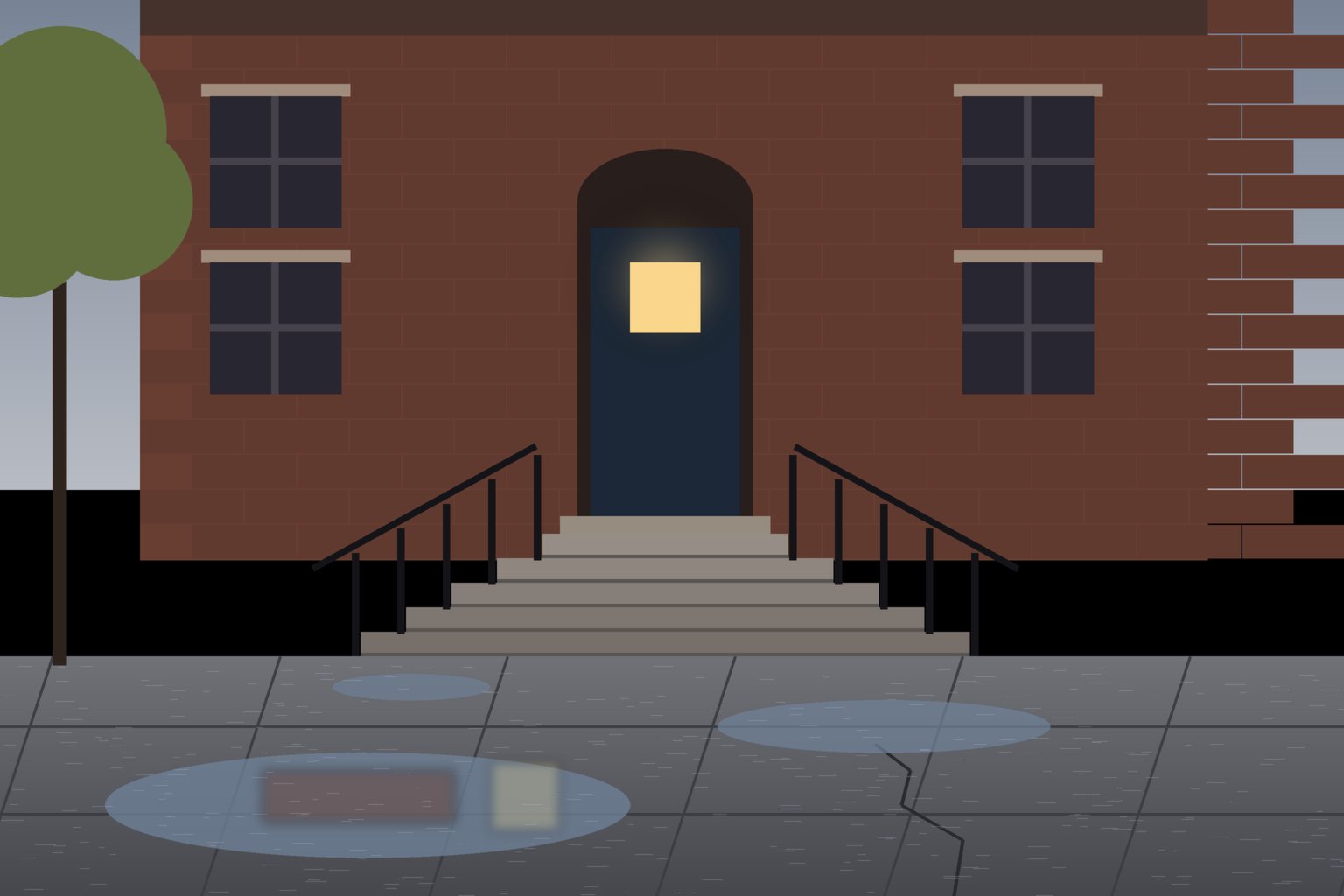
Actual notice means the defendant knew about the condition, for example because of a complaint, a work order, or an earlier incident. Constructive notice means the condition was visible and apparent and existed long enough before the accident that the defendant should have discovered and fixed it. A hazard the owner created is a different situation, because notice may not be required.
Common Premises Hazards
Typical situations include wet or slippery floors, uneven sidewalks, broken or missing stair railings, poor lighting, snow and ice, loose carpeting, and falling objects or debris. Another category is inadequate security, which looks at whether an attack on property was foreseeable and whether reasonable protective steps were taken. The firm’s pages on slip and fall and sidewalk and walkway accidents describe examples.
New York City Sidewalks
New York City’s Administrative Code generally places responsibility for maintaining sidewalks on the adjoining property owner, with an exception for many one-, two-, and three-family owner-occupied residential properties, which are not subject to the same civil liability. Whether a particular sidewalk falls under the rule depends on the property and the facts, so do not assume.
Open and Obvious Conditions and Shared Fault
Property owners often argue that a hazard was open and obvious, or that the injured person was not paying attention. In New York, an obvious condition does not automatically eliminate the owner’s duty, but it can bear on comparative fault. Under CPLR 1411, if a person is found partly responsible, damages are reduced in proportion to that share rather than barred. How these ideas apply depends on lighting, the layout, and what a person could reasonably see.
Claims Involving Public Property
If the property is owned or operated by New York City, a public authority, or another public body, special rules apply. Generally, a written notice of claim must be served within 90 days of the incident, and a lawsuit must be started within one year and 90 days. Claims involving city sidewalks and streets may also involve prior written notice laws. These rules are strict. Missing an early deadline can limit or end a later lawsuit even when the facts are serious.
Deadlines for Private Property Claims
Most personal injury lawsuits against private owners must be started within three years under CPLR 214. A death arising from a property hazard is governed by a separate period, discussed in our wrongful death page. Our guide to personal injury deadlines in New York explains how the periods fit together. Consult an attorney about your dates.
What You Can Do After a Fall or Injury on Property
Seek medical care and describe every symptom. Report the incident in writing to the owner, manager, or business if you can, and ask for a copy. Photograph the condition, the surrounding area, and your injuries as soon as it is safe. Keep the shoes and clothing you wore. Get the names of witnesses and employees. Avoid posting a detailed account online. Think carefully before giving a recorded statement to an insurer. See when to hire a personal injury lawyer for how to decide what to do next.
About a Free Consultation
A free consultation is a conversation about facts, dates, and options. It is not a promise that a claim exists, that it is timely, or that it will succeed. Bisogno & Meyerson, LLP offers one so that people can understand where they stand before deciding anything. See the firm overview for background.
Call (718) 745-8880 or contact us. Attorneys on the site are Patrick Bisogno, Esq.; Michael C. Meyerson, Esq.; and George A. Silva, Esq. Bring any photographs, incident reports, and medical paperwork.
Attorney Advertising. This page is general information from Bisogno & Meyerson, LLP, not legal advice. Contacting the firm does not, by itself, create an attorney-client relationship.